

Tankless Water Heater Pros and Cons Key Takeaways
Deciding between tankless and traditional water heaters for your Knoxville home requires weighing significant advantages against notable challenges:
• Energy savings are substantial: Tankless systems use 24-34% less energy for low-usage homes and 8-14% less for high-usage households, saving Tennessee homeowners over $100 annually.
• Higher upfront costs demand careful planning: Installation averages $2,637 but can reach $8,000 with electrical upgrades, making professional assessment crucial before committing.
• Flow rate limitations affect large households: Multiple simultaneous fixtures can overwhelm capacity, causing temperature drops when running showers and appliances together.
• Knoxville's hard water requires regular maintenance: Units need descaling every 6-9 months in hard water areas to prevent efficiency loss and system failures.
• Professional sizing prevents costly mistakes: Ground water temperature, peak usage patterns, and electrical capacity must be properly evaluated by local plumbing experts.
The 20+ year lifespan and endless hot water supply make tankless systems attractive, but success depends on matching the right unit size to your specific household needs and Knoxville's water conditions.
When you think about the tankless water heater pros and cons, you'll find these systems can be 24-34% more energy efficient for homes using less hot water each day. This becomes especially important for Knoxville homeowners who want to review their water heater options.
Understanding Tankless Water Heaters for Knoxville Residents
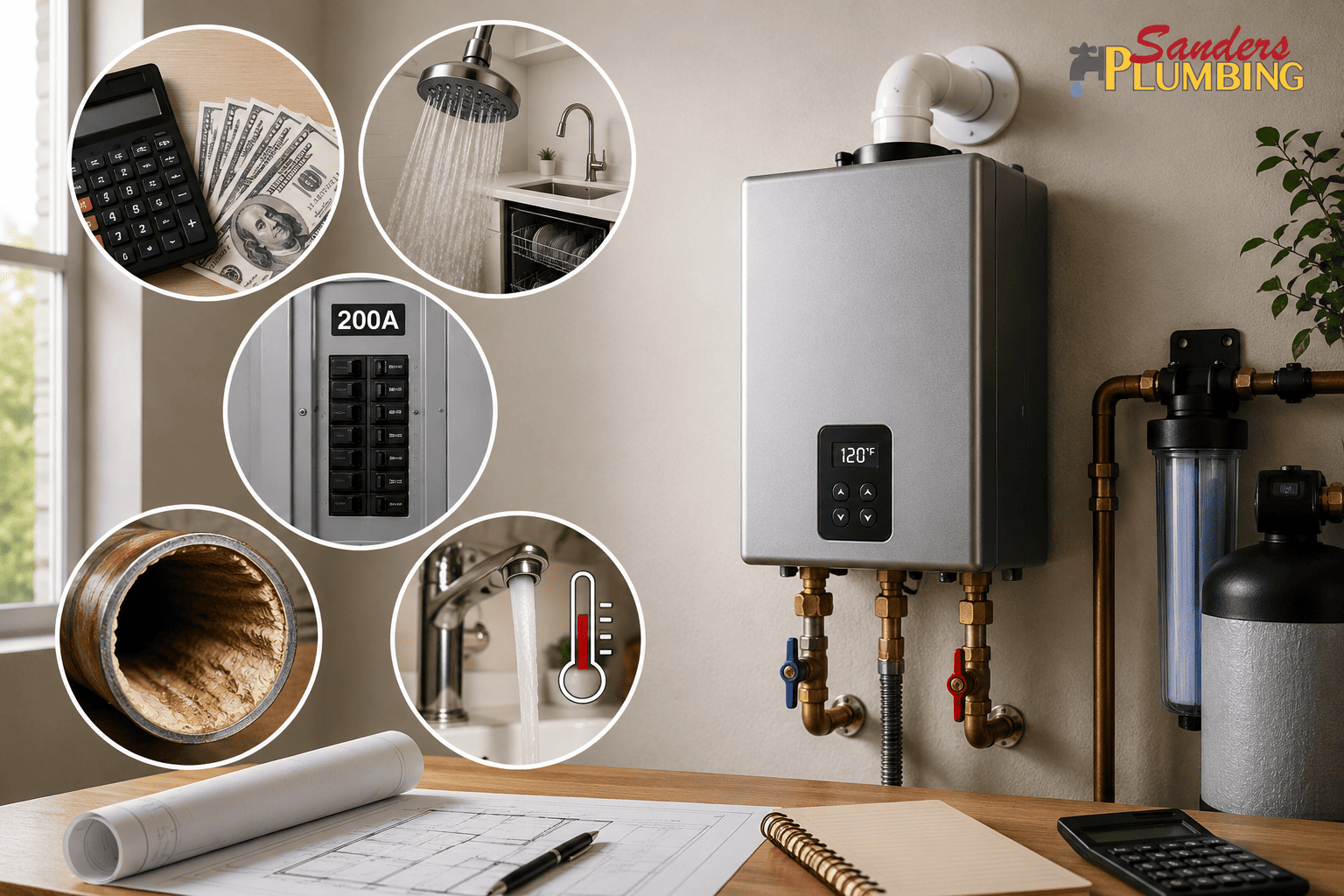
Understanding both the benefit of tankless hot water heater technology and the disadvantage of tankless water heater systems helps you make an informed investment. Tankless units last over 20 years. Traditional tanks last just 10 years. The question "is tankless water heater worth it" depends on your household needs and hot water usage patterns. Sanders Plumbing is here to help you review whether going tankless makes sense for your Knoxville home!
What Makes Tankless Different from Traditional Tanks
Traditional tank water heaters store hot water in an insulated reservoir and keep it heated all the time. Tankless systems heat water only at the time you turn on a faucet or appliance. This fundamental difference eliminates standby energy losses that occur when tank heaters maintain water temperature around the clock.
Tank heaters last 10-15 years. Tankless units operate for more than 20 years. The compact design means you skip the bulky storage tank and free up valuable space in your Knoxville home.
How Demand-Type Water Heating Functions
Cold water flows through a heat exchanger inside the tankless unit at the time you activate a hot water fixture. A natural gas burner or electric element heats the water to your desired temperature. The system remains inactive until it detects water flow and then uses circuitry to maintain consistent temperature through a negative feedback loop.
Water circulates through copper heat exchangers that feature parallel plates or tubes. These create large surface areas to transfer heat rapidly. The heating stops once you close the faucet. This on-demand operation delivers a constant hot water supply without the wait for a storage tank to refill.
Sizing Requirements for Your Home
Knoxville residents need to size a tankless water heater properly. Tankless units provide hot water at 2-5 gallons per minute. Gas-fired models produce higher flow rates than electric versions.
Ground water temperatures affect sizing requirements. Knoxville's climate means your incoming water temperature is different from southern Florida or northern Minnesota. You need to calculate your peak usage by identifying how many fixtures run at once. A household of two requires 6-8 GPM. Families of four need 8-10 GPM units.
A shower running while the dishwasher operates can stretch a tankless heater to its capacity. Proper sizing prevents temperature drops during peak usage periods.
Advantages of Going Tankless in Knoxville
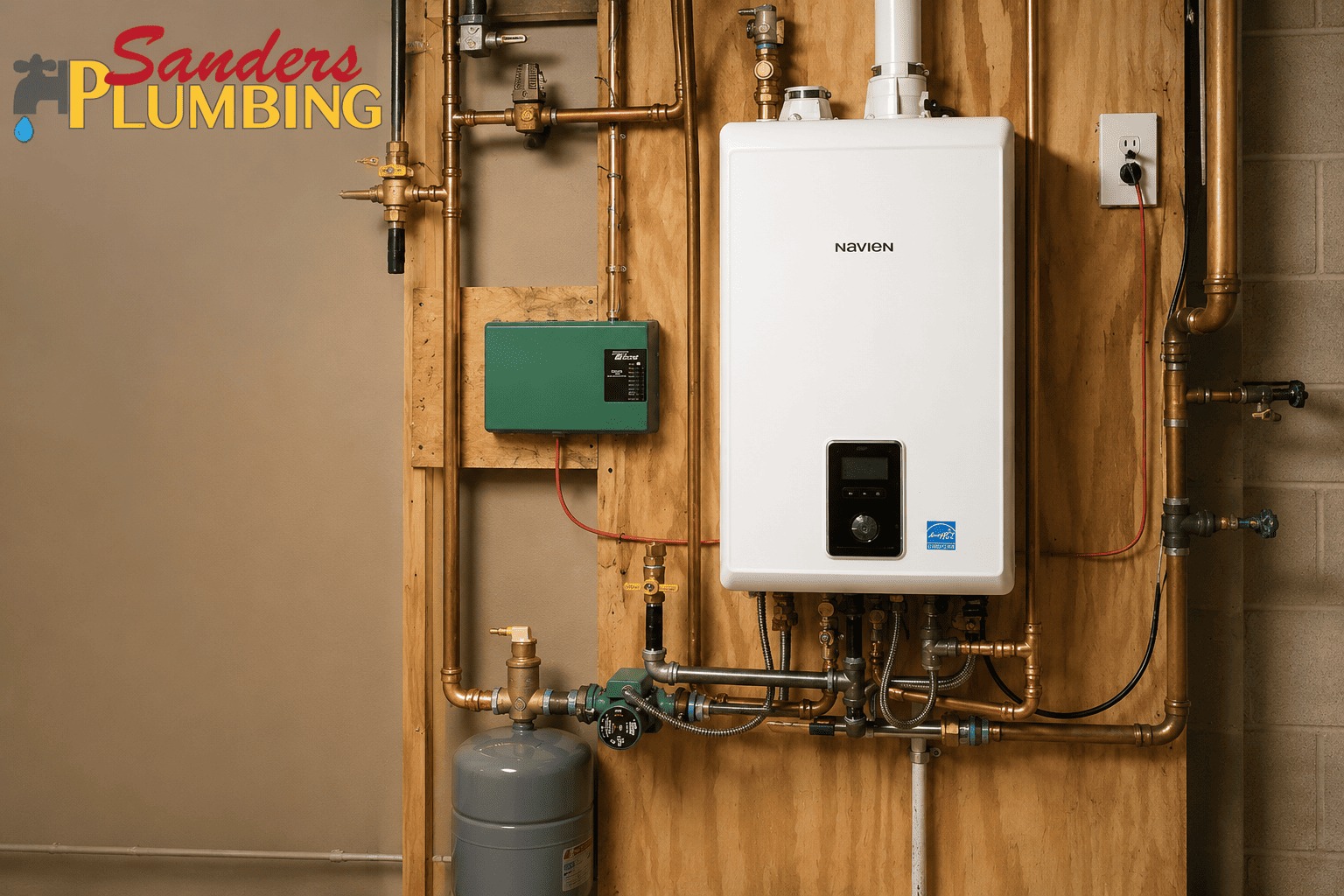
Choosing a tankless water heater means more than just upgrading your equipment—it changes how your home delivers hot water every day. From lower energy costs to space-saving design, these systems offer several advantages that appeal to Knoxville homeowners looking for long-term efficiency and convenience.
Endless Hot Water On Demand
Tankless systems deliver continuous hot water flow without the limitations of a storage reservoir. You can take back-to-back showers or run multiple loads of laundry without experiencing cold water interruptions. The heating element activates instantly when water flows through the unit and supplies hot water as long as fixtures remain open. This eliminates recovery time between uses that plague traditional tanks.
Energy Cost Savings for Tennessee Homeowners
Homes using 41 gallons or less of hot water daily achieve 24-34% greater energy efficiency with tankless systems. Even households consuming around 86 gallons daily see 8-14% efficiency improvements. Tennessee homeowners save over $100 annually on utility bills, which translates to roughly $2,000 in savings over the unit's lifespan. Tankless heaters use 30-50% less energy than conventional tanks because they eliminate standby heat losses from constantly reheating stored water.
Compact Size for Limited Spaces
Tankless units measure just 2-3 feet tall compared to traditional tanks reaching 6 feet. Wall-mounted installation frees floor space in basements, closets, and utility rooms. Knoxville homeowners with limited square footage gain flexibility to install units in tight spaces, under sinks, or even outdoors in appropriate enclosures. This compact design allows you to reclaim areas previously occupied by bulky storage tanks.
20+ Year Lifespan
Most tankless water heaters operate for more than 20 years, nearly double the 10-15 year lifespan of storage tanks[71]. Units feature easily replaceable parts that extend operational years even further. This longevity reduces replacement frequency and associated costs for Knoxville properties where you plan long-term residence.
Reduced Risk of Water Damage
Storage tanks can rupture or leak and release dozens of gallons onto floors. This causes damage to flooring and belongings that can get pricey. Tankless systems eliminate this risk by heating water on demand without maintaining a large water reservoir. Connection leaks remain possible, but the absence of a storage tank reduces flooding potential dramatically.
Drawbacks and Challenges to Consider
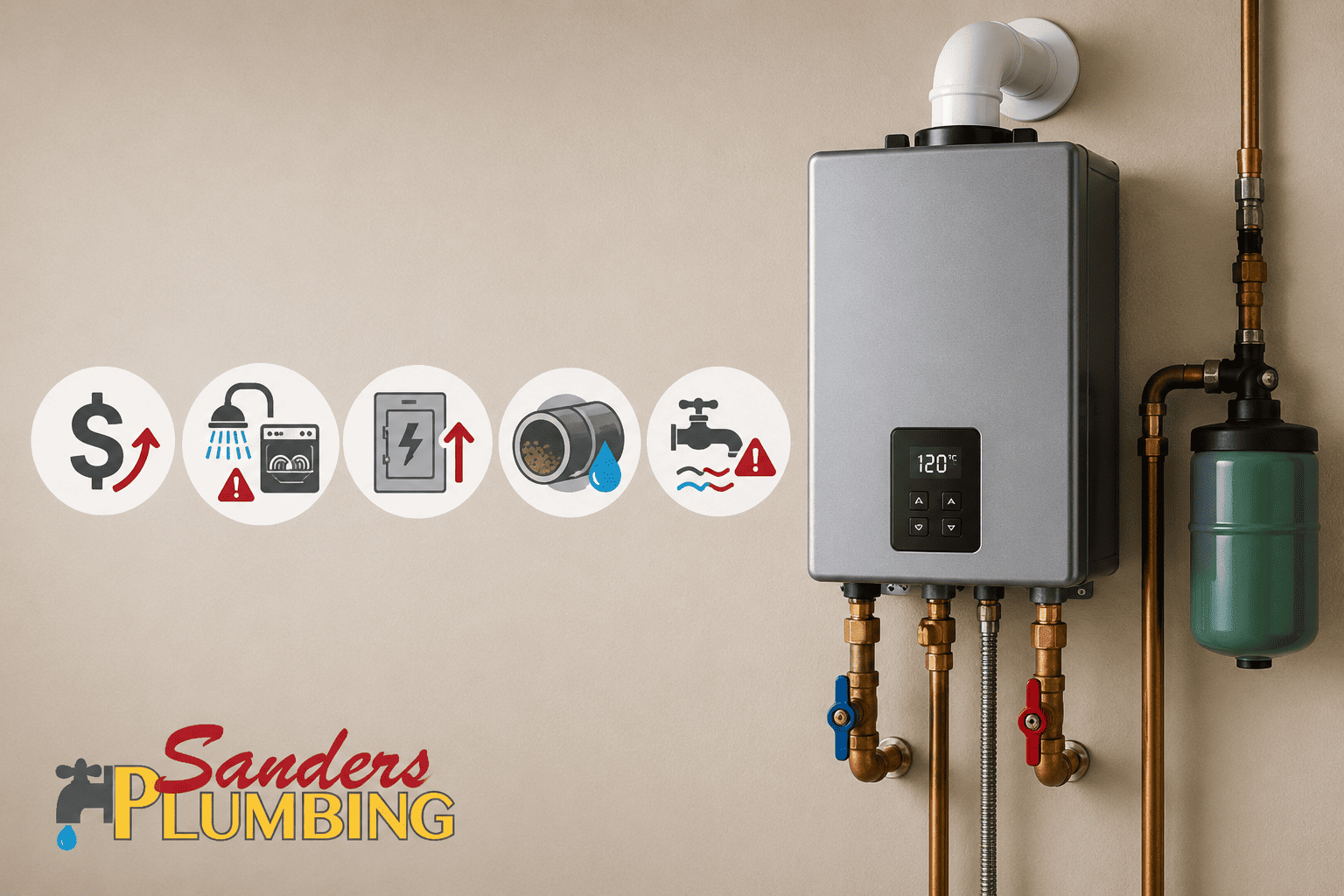
While tankless water heaters offer impressive benefits, they also come with trade-offs that homeowners should understand before making the switch. Higher upfront costs, maintenance needs, and performance limitations during heavy demand can all affect whether a tankless system is the right fit for your Knoxville home.
Higher Original Investment and Installation Expenses
Installation costs represent the biggest problem with tankless water heater systems. Most installations average $2,637, with ranges between $1,400 and $4,000. Complete residential installations can reach $4,000 to $8,000 at the high end. Labor alone runs $600 to $1,850. Permits and electrical service upgrades add $200 to $500. Electric units cost $800 to $1,500 installed, whereas gas-powered models need $1,000 to $1,500 because they need exhaust venting and gas supply lines.
Flow Rate Limitations with Multiple Fixtures
Running a shower while the dishwasher operates can push your unit past its capacity. This causes temperature shifts and cold water interruptions. Electric tankless systems max out at 8 GPM for whole-house applications, which limits their use in larger Knoxville homes. You'll experience the exact opposite of endless hot water when demand exceeds your unit's capacity.
Electrical Panel Upgrades May Be Needed
Electric tankless heaters need 200-amp service. You cannot install higher-capacity units without upgrading your electrical service if your Knoxville home has a 150-amp panel. This infrastructure improvement adds considerable costs to your project, and panels should not operate beyond 80% of rated capacity.
Descaling Maintenance in Hard Water Areas
Knoxville's water quality needs attention to mineral buildup. Manufacturers recommend flushing tankless units once yearly, but homes in hard water areas need descaling every six to nine months. Calcium and magnesium deposits coat the heat exchanger and restrict water flow. This reduces heating efficiency. Neglecting this maintenance causes system failures and expensive repairs.
Temperature Fluctuations During Peak Use
Scale on heat exchangers causes the most common long-term temperature fluctuations. Your unit compensates by firing harder, then backing off. This creates inconsistent output at taps. Cold incoming water in winter reduces effective capacity further and intensifies performance issues during peak demand periods.
Making the Right Choice for Your Knoxville Property
Choosing the right tankless water heater requires more than comparing features and prices. Your household’s water usage, Knoxville’s hard water conditions, and long-term operating costs all play a role in determining whether a tankless system will deliver the performance and savings you expect.
Evaluating Your Hot Water Needs
Calculate your peak hour demand by tracking simultaneous fixture usage. Track when your household uses the most hot water. A family of four needs 8-10 GPM capacity. Ground water temperature in Knoxville affects sizing requirements differently than warmer southern climates.
Budget Considerations and Long-Term Savings
Annual operating costs for gas tankless models run $195-$245, while electric units cost $535-$580 yearly. Gas models are less expensive to operate due to lower fuel costs rather than superior efficiency. The benefit of tankless hot water heater technology shows in reduced utility bills that offset higher installation expenses over time.
Knoxville Climate and Water Quality Factors
About 85% of the U.S. has hard water. Water treatment is necessary when hardness exceeds 7 grains per gallon. Manufacturers like Noritz and Rinnai void warranties when hardness surpasses 12 grains per gallon. This is a critical factor in evaluating is tankless water heater worth it for your property. Hard water minerals reduce efficiency by insulating heating elements from water.
Working with Local Plumbing Professionals
Fuel type, climate and local building codes determine proper installation. Request written cost estimates and check references with your local Better Business Bureau. Qualified Knoxville plumbing contractors ensure units meet code requirements and operate at peak efficiency.
Call Your Local Trusted Knoxville Plumber to Help You Make The Choice Today
Understanding the tankless water heater pros and cons is easier when you work with a local team that knows Knoxville homes inside and out. At Sanders Plumbing, we help homeowners determine whether a tankless system is the right investment by evaluating water hardness, household hot water demand, electrical capacity, and long-term energy savings. Our experienced plumbers understand how East Tennessee’s water conditions and building codes affect installation, performance, and maintenance, allowing us to recommend the best solution for your home and budget. From accurate sizing to professional installation and ongoing service, Sanders Plumbing delivers reliable guidance and expert workmanship that helps you get the most from your water heating system for years to come.
Why You Should Trust Sanders Plumbing
Talk to Sanders Plumbing Company about your low water pressure issues today. Their expert technicians will find the root cause and create lasting solutions. They can replace faulty PRVs or install booster pumps that reshape your water flow. Without doubt, professional help ensures your system runs at the ideal 40-60 PSI range while protecting your plumbing infrastructure.
Your home will benefit from stronger showers, faster-filling appliances, and steady water pressure. This approach also protects your plumbing system from pressure-related stress. Don't put up with weak water flow any longer - take action today. The difference in your morning shower will amaze you!
Meet the Founders: Vickie and James (Pete) Sanders
Vickie Sanders's bright personality and leadership drive Sanders Plumbing Company's success. She and her husband Pete (James W. Sanders) have built the company together over 35 years. People often call her "the neck that turns the head" of the business. She handles operations, marketing, payroll, and HR with skill. Knoxville's community knows her for local networking, gardening, love of hippos, and amazing cooking skills. Her treats often make their way to the office. Vickie's leadership style creates a warm, family-like atmosphere at the company.
James W. "Pete" Sanders started his plumbing journey as a child working with his father. He went to trade school during high school and worked at a local plumbing company until 1984. He launched Sanders Plumbing in 1989 and became one of Knoxville's youngest plumbers to earn a Master's license. The company grew into a respected local institution under his guidance, known for expertise and integrity. Pete serves on the Executive Advisory Board of Success Group International and maintains high industry standards. He and Vickie have two children and strong ties to the Knoxville community.
Truly Locally Owned Location and Business
Sanders Plumbing Company serves homeowners throughout Knox County from their Knoxville, Tennessee base. Their customer care and plumbing services reach homes across the local community.


"